
Your social media manager is drowning. They're posting three times a day, monitoring comments, analyzing trends, writing scripts, editing videos, and somehow supposed to drive revenue. It's not sustainable. And in 2026, the smartest brands are finally admitting it.
The platforms have changed. The volume requirements have exploded. The skillset needed is no longer something one person can master. And yet most brands are still clinging to the 2019 playbook: hire a social media manager, hand them the keys, and hope for viral magic.
It doesn't work anymore.
Look at what brands are actually asking for when they hire a social media manager in 2026:
Strategy: Develop content calendars, identify trends, analyze competitor content, understand platform algorithms
Creation: Write scripts, appear on camera, source props, scout locations, conduct interviews
Production: Film content, edit videos, design graphics, add captions, optimize for each platform
Distribution: Post consistently, engage with comments, respond to DMs, monitor mentions
Performance: Track metrics, report on ROI, adjust strategy based on data, prove content's business impact
That's not a job. That's five jobs. And according to Sprout Social's 2026 Social Media Management Report, 67% of social media managers report feeling burned out, with workload cited as the primary factor.
The problem isn't that social media managers aren't talented. The problem is the role has become structurally impossible.
Three platform shifts killed the traditional social media manager role:
1. Video became mandatory
In 2026, short-form video isn't optional. Meta's Q1 2026 earnings report showed that Reels now account for over 50% of time spent on Instagram. TikTok continues to dominate with users spending an average of 95 minutes per day on the platform, according to eMarketer's latest data.
Video production requires a completely different skillset than static posts. Lighting, framing, audio, editing, pacing, hooks, retention tactics. Most social media managers weren't hired for this. They learned it on the job while everything else piled up.
2. Volume requirements tripled
The algorithm doesn't reward perfection. It rewards consistency and volume. Brands that post once a day are invisible. Brands that post 3-5 times per day across platforms dominate reach.
HubSpot's 2026 State of Marketing Report found that brands posting daily on TikTok see 4x the engagement of those posting weekly. On Instagram, the sweet spot is now 5-7 Reels per week just to maintain baseline visibility.
One person cannot sustainably produce that volume at quality. Not without sacrificing strategy, analysis, or their mental health.
3. Format expertise became specialized
What works on TikTok doesn't work on YouTube Shorts. What works on Reels doesn't work on LinkedIn. Each platform has its own culture, editing style, optimal length, and audience expectations.
Mastering one platform takes months. Mastering four simultaneously while also handling strategy and reporting? Impossible.
Benchmark data based on high-performing brand accounts tracked in Q1 2026. These represent minimum posting frequencies to maintain algorithmic visibility.
Brands maintaining competitive reach in 2026 are posting significantly more than in previous years. The platforms reward volume, and expecting one person to hit these benchmarks while maintaining quality is unrealistic.
Forward-thinking brands aren't hiring another generalist. They're building content systems.
A content system separates the roles that were jammed into one job description:
Strategist: Owns content direction, trend monitoring, performance analysis. Not creating content.
On-camera talent: The face of the brand. Could be the founder, an employee, or a hired creator. Their job is showing up and delivering on camera.
Editor/producer: Handles all post-production. Editing, captions, formatting for each platform, optimization.
Distributor: Manages posting schedules, community engagement, comment responses.
These roles don't need to be four full-time people. But they need to be separated. One person handling strategy shouldn't also be the one editing at 11pm trying to hit tomorrow's posting deadline.
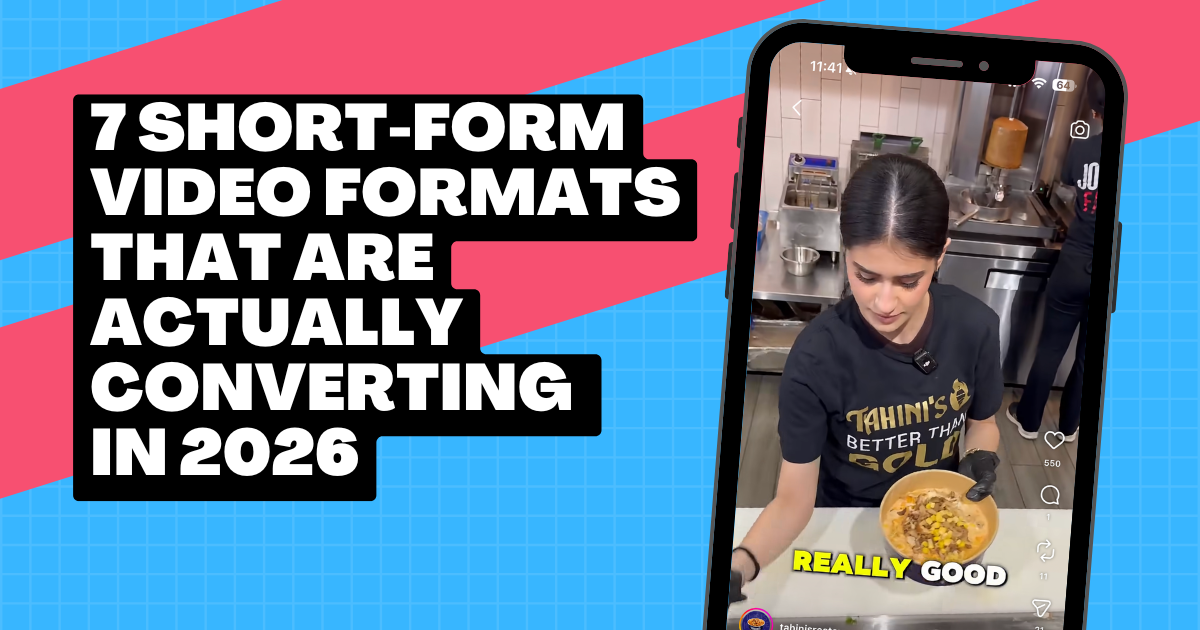
The best example of this model in action is what Storybox built for Tahini's.
Instead of hiring a social media manager and hoping for consistency, they built a repeatable system:
Weekly filming blocks: Batch 2-4 weeks of content in a single shoot day. The on-camera talent (in this case, the owner) shows up, performs, and leaves. No editing. No strategy. Just creation.
Format library: Instead of reinventing content every week, they built a library of proven formats. Customer reactions. Behind-the-scenes. Product demos. Trend hijacks. Each format has a template.
Dedicated editing: A team handles all post-production. The content doesn't sit in a backlog waiting for the social media manager to find time between meetings.
Platform-specific optimization: Every video is reformatted, re-captioned, and adjusted for TikTok, Reels, and Shorts separately.
The result: 75M+ views every three weeks. 1M+ TikTok followers. 3.2M+ YouTube subscribers. Not because of one talented person juggling everything. Because of a system designed for volume and consistency.
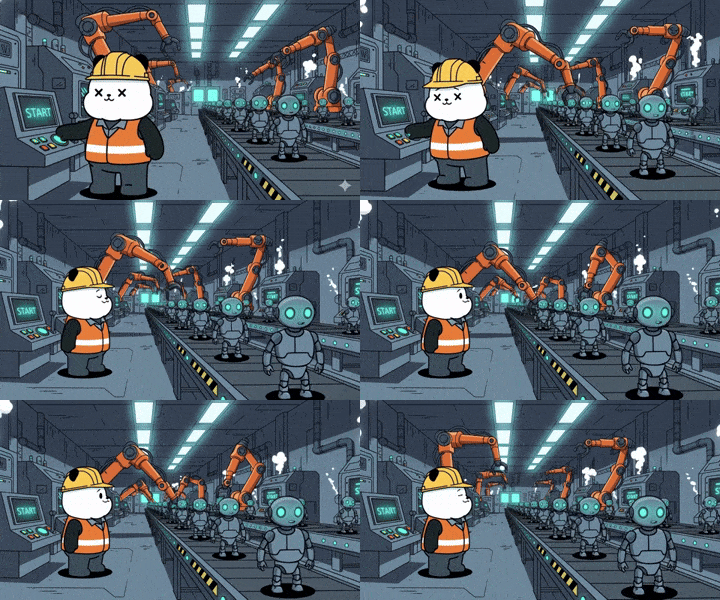
When brands move from a generalist to a system, three things improve immediately:
Volume increases
A dedicated editor can process 20+ videos per week. A social media manager juggling five other responsibilities can maybe finish 5. The math is simple.
Quality stays consistent
When the same person edits every video, the style stays cohesive. Hooks are sharper. Pacing is tighter. Branding is consistent. A burned-out generalist produces inconsistent work because they're rushing.
Strategy gets sharper
When someone's only job is analyzing performance and planning content, they actually do it. They're not distracted by editing deadlines or comment management. They can focus on what's working and double down.
According to Content Marketing Institute's 2026 B2C Content Marketing Report, brands with documented content systems are 3x more likely to report content marketing success compared to those relying on ad-hoc execution.
Illustrative comparison showing average monthly content output. Months 1-3 represent typical generalist output. Month 4 marks transition to specialized system. Data directional based on client transitions tracked in 2025-2026.
The shift from generalist to system doesn't happen overnight, but the trajectory change is dramatic. Brands that make the switch see content output nearly triple within 90 days.
"But our brand is too small for a system"
A system doesn't mean hiring four full-time people. It means separating responsibilities. Your founder can be the on-camera talent. You can hire a freelance editor for 10 hours a week. You can use CapCut templates to speed up production. The principle is the same: don't expect one person to do everything.
"Our social media manager is doing fine
Define fine. Are you posting daily? Are you hitting 100K+ views per month? Are you converting content into revenue? Or are you posting 3x per week and calling it consistent because that's all one person can manage?
Your competitors are building systems. Fine isn't good enough anymore.
"We need someone who understands our brand"
Brand understanding comes from clear documentation and onboarding, not from cramming every responsibility into one role. A specialized editor who's briefed properly will produce more on-brand content than a burned-out generalist rushing to meet deadlines.
"Systems are expensive"
Burning through social media managers every 18 months is expensive. Paying a salary for inconsistent output is expensive. Missing the content wave while your competitors build audiences is expensive.
A system costs less than you think when you factor in actual output and retention.
Here's what a basic content system looks like for a mid-sized brand in 2026:
Monthly time investment:
Monthly output:
Cost:
If you're ready to move away from the generalist model, here's where to start:
Audit current output
How many pieces of content are you actually publishing per week? How does that compare to competitors? Be honest about whether your current setup can scale.
Separate roles immediately
Even if it's the same person wearing different hats, define when they're strategizing vs. creating vs. editing. Stop expecting simultaneous execution.
Batch creation
Film multiple videos in one session. Never shoot one video at a time. Batching is the only way to build a content bank that keeps you ahead of posting schedules.
Build a format library
Document what works. Create templates. When you find a winning format, repeat it 10 times before moving on. Consistency beats novelty.
Hire for specialization
Next hire shouldn't be another generalist. It should be someone who does ONE thing exceptionally well. An editor. A strategist. A creator. Let them focus.
Track output, not just engagement
Engagement matters, but volume is the leading indicator. If you're not posting enough, engagement is irrelevant. Track how many videos you're publishing and whether that number is increasing month over month.

Q: Does this mean social media managers are obsolete?
A: No, but the role is evolving. The best social media managers in 2026 are becoming content strategists or system builders, not generalists trying to do everything. The skillset is shifting from execution to orchestration.
Q: How do small brands afford a content system if they can't hire a full team?
A: You don't need four full-time people. Start by separating responsibilities even within one person's schedule. Then layer in freelancers or agencies for editing and production. A system is about process, not headcount. Many brands work with agencies like Storybox to access the full system without building it in-house.
Q: What if our social media manager is already producing good content?
A: Good isn't the question. The question is: can they sustain the volume required to compete in 2026? If they're posting 3x per week while competitors post 5x per day, 'good' won't matter. Evaluate output capacity, not just content quality.
Q: How long does it take to transition from a generalist to a content system?
A: Most brands see meaningful output increases within 60-90 days of separating roles and batching content. The key is starting with one change (like batched filming) rather than overhauling everything at once.
Q: Can content systems work for B2B brands or just consumer brands?
A: Content systems work for any brand that needs consistent output. B2B brands often need less volume than consumer brands, but they still benefit from separating strategy, creation, and production. The principles of batching, format libraries, and specialized roles apply universally.
The social media manager role isn't dead because the people in it aren't talented. It's dead because the platforms changed faster than the job description evolved.
In 2026, the brands winning on social aren't the ones with the best generalist. They're the ones who built systems that separate strategy, creation, production, and distribution into specialized roles that actually scale.
If you're still relying on one person to do everything, you're not competing. You're surviving. And survival isn't a strategy when your competitors are building content engines designed to compound.
Ready to build a content system that actually scales? Storybox helps brands move from sporadic content to repeatable systems that drive real results. Let's talk.