Social media died four years ago.
Most brands didn't notice. They kept posting to their followers, optimizing captions, and obsessing over engagement rates from people who stopped seeing their content years ago.
What replaced social media is called interest media — and it changes everything about how content works in 2026.
Your feed no longer shows you posts from people you follow. It shows you content based on what you've been interested in recently. That shift — from relationship-driven feeds to algorithmic interest feeds — fundamentally rewrites the rules of content marketing.
Here's what that means for your brand, why it's actually a massive opportunity, and how to build content that wins in this new reality.
Interest media is the term for how platforms like TikTok, Instagram, YouTube Shorts, and even LinkedIn now operate.
You don't see content from your cousin or your high school friend anymore. You see content from creators and brands the algorithm thinks you'll care about — based on what you've watched, liked, searched, or engaged with recently.
Why platforms made the shift:
Interest feeds keep users on the platform longer. If every scroll shows you something you're into right now — not something from someone you followed five years ago — you stay engaged.
For users, that means:
For brands, it means:
%%CHART%%eyJ0eXBlIjoiYmFyIiwidGl0bGUiOiJSZWFjaCBQb3RlbnRpYWw6IEZvbGxvd2VyLUJhc2VkIHZzIEludGVyZXN0LUJhc2VkIEZlZWRzIiwibm90ZSI6IklsbHVzdHJhdGl2ZSBiZW5jaG1hcmsgc2hvd2luZyB0aGUgc2hpZnQgaW4gb3JnYW5pYyByZWFjaCBvcHBvcnR1bml0eSBmb3IgbmV3IGFjY291bnRzLiBJbiB0aGUgc29jaWFsIG1lZGlhIGVyYSwgcmVhY2ggd2FzIGNhcHBlZCBieSBmb2xsb3dlciBjb3VudC4gSW4gdGhlIGludGVyZXN0IG1lZGlhIGVyYSwgcmVhY2ggaXMgZGV0ZXJtaW5lZCBieSBjb250ZW50IHBlcmZvcm1hbmNlLCBub3QgYXVkaWVuY2Ugc2l6ZS4iLCJkYXRhIjpbeyJsYWJlbCI6IlNvY2lhbCBNZWRpYSBFcmEgKDIwMTgpIiwidmFsdWUiOjE1fSx7ImxhYmVsIjoiSW50ZXJlc3QgTWVkaWEgRXJhICgyMDI2KSIsInZhbHVlIjo4NX1dfQ%%
In the old social media era, reach was a function of followers. If you had 500 followers, your post might reach 50 people. If you had 5 million followers, your post might reach 500,000.
That system rewarded early movers — people who built audiences when platforms were new and distribution was wide open.
Interest media flipped that entirely.
Now, reach is a function of content quality and relevance, not audience size. A brand-new account with zero followers can post a video today and get 9 million views if the content resonates with the right audience.
Real example: Gary Vaynerchuk started a new TikTok account in 2026 with zero followers. The first post got 9.4 million organic views. That same video, posted to his account with 15 million followers, got 300,000 views.
That's how interest media works. The algorithm doesn't care who you are. It cares if the content works.
What this means for brands:
If you've been waiting to start posting because you "don't have enough followers," that excuse is officially dead.

Most brands are making the same kind of content over and over. Same format. Same topic. Same platform.
That's a death sentence in interest media.
The algorithm rewards variety — different hooks, different formats, different topics, different platforms. The more you diversify, the more chances you have to hit.
What that looks like:
Your job isn't to "stay on brand." Your job is to make enough different stuff that the algorithm finds an audience for you.
In interest media, each post is independent. One video doesn't build on the last. Each one gets distributed based on its own merit.
That means the more you post, the more at-bats you get. More at-bats = more chances to break through.
What high-performing brands do:
Perfectionism is the enemy here. Speed and volume win.
At Storybox, we help brands build repeatable content systems that produce 20-40 pieces of short-form content per week. That's not because we're chasing vanity metrics. It's because in interest media, volume is the strategy.
If you hate being on camera, you're not out of options.
Platforms like Substack are thriving in 2026. Written content is making a comeback — not because people want generic blog posts, but because they'll pay for information from people they trust.
How to win with written content:
Written content is also being indexed by AI. Every article you publish today will be referenced when someone asks ChatGPT or another AI bot a question related to your industry.
If video isn't your thing, lean into written content. The distribution potential is real.
Here's the part most brands aren't thinking about yet:
Every piece of content you publish in 2026 is being indexed to show up in AI search results.
In four years, most people won't Google things. They'll ask an AI bot. And that bot will pull answers from the content you're creating right now.
Example scenario:
Someone says to their voice assistant: "Alexa, order dinner for five people tonight. One's lactose intolerant, one's gluten-free, two love spicy food, and one is Persian. Make it feel special."
Alexa processes that request and orders from four different restaurants — all chosen by the AI based on relevance, ratings, and brand recognition.
If your restaurant isn't a known brand, you won't be in that order. The AI will default to whoever has the strongest brand equity in its database.
What this means:
Content you create today — videos, blogs, posts, newsletters — is building your brand presence in the AI ecosystem. The more you publish, the more data AI has to reference when someone asks a question related to your business.
Brand equity isn't just marketing fluff anymore. It's the only moat left in a world where AI makes purchasing decisions for us.
%%CHART%%eyJ0eXBlIjoibGluZSIsInRpdGxlIjoiUHJlZGljdGVkIFNoaWZ0IGluIFNlYXJjaCBCZWhhdmlvdXI6IFRyYWRpdGlvbmFsIFNlYXJjaCB2cyBBSS1Bc3Npc3RlZCBTZWFyY2giLCJub3RlIjoiRGlyZWN0aW9uYWwgZm9yZWNhc3Qgc2hvd2luZyB0aGUgZ3Jvd3RoIG9mIEFJLWFzc2lzdGVkIHNlYXJjaCBhcyBhIHBlcmNlbnRhZ2Ugb2YgdG90YWwgc2VhcmNoIGJlaGF2aW91ci4gQXMgdm9pY2UgYXNzaXN0YW50cyBhbmQgQUkgYWdlbnRzIGJlY29tZSBwcmltYXJ5IGludGVyZmFjZXMsIGJyYW5kIHJlY29nbml0aW9uIGJlY29tZXMgY3JpdGljYWwgdG8gYmVpbmcgc3VyZmFjZWQgaW4gcmVzdWx0cy4iLCJkYXRhIjpbeyJsYWJlbCI6IjIwMjQiLCJ2YWx1ZSI6MTB9LHsibGFiZWwiOiIyMDI1IiwidmFsdWUiOjI1fSx7ImxhYmVsIjoiMjAyNiIsInZhbHVlIjo0NX0seyJsYWJlbCI6IjIwMjciLCJ2YWx1ZSI6NjV9LHsibGFiZWwiOiIyMDI4IiwidmFsdWUiOjgwfV19%%
Every brand is fighting for the same thing in 2026: attention.
Attention used to be controlled by companies with big budgets who could afford TV ads, billboards, and radio spots. Now, attention is distributed by algorithms — and algorithms don't care about your budget. They care about whether your content keeps people engaged.
That levels the playing field.
A solo operator with a smartphone can build more attention than a Fortune 500 company if they're making better content.
What that means for brands:
If you're not making content, someone else in your industry is. And they're taking your market share.

If you're ready to stop thinking and start doing, here's the playbook:
1. Post daily on at least 3 platforms. TikTok, Instagram Reels, and YouTube Shorts are non-negotiable. Add LinkedIn if you're B2B.
2. Make 10 different versions of the same core message. Change the hook, the format, the thumbnail, and the platform. Test everything.
3. Batch your content. Film 20 videos in one session. Use tools like CapCut to edit fast and repurpose efficiently.
4. If you hate video, start writing. Launch a Substack and publish weekly. Charge for premium content. Build a list.
5. Track what works. Use platform analytics to see what's resonating. Double down on winners. Kill losers fast.
6. Build a content system, not one-off posts. Repeatable formats, weekly filming schedules, and performance-driven iteration are how you scale.
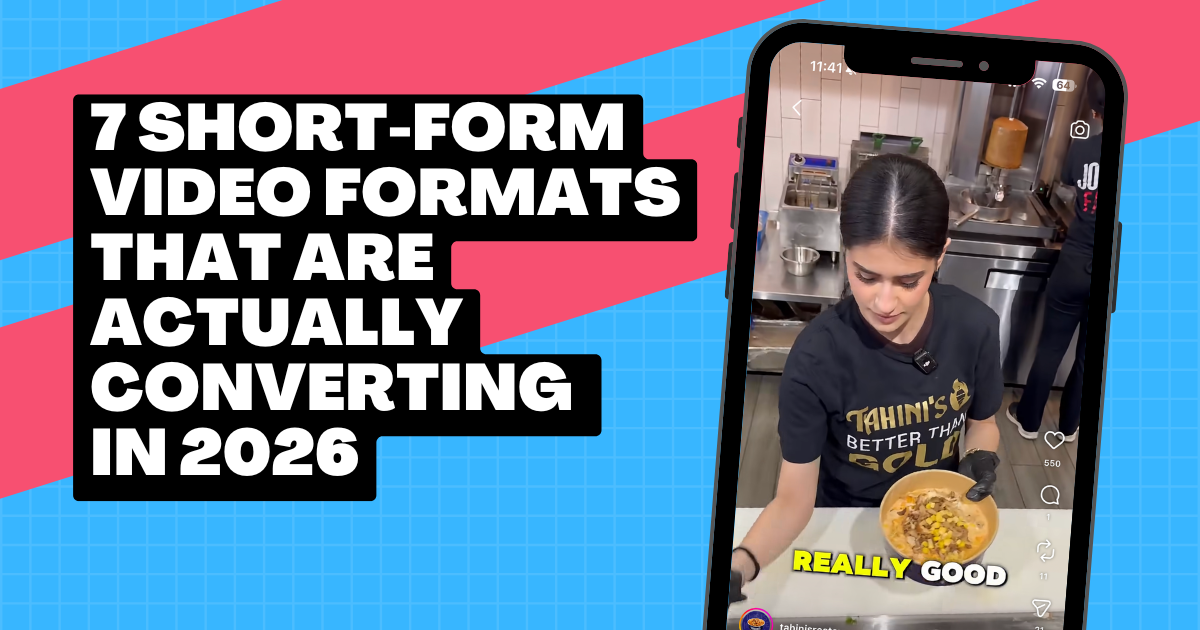
At Storybox, we've helped brands like Tahini's generate 75M+ views every three weeks by building high-volume, high-performing content systems. It's not magic. It's structure, repetition, and relentless testing.
Q: How is interest media different from social media?
A: Social media showed you content from people you followed — friends, family, brands you chose to follow. Interest media shows you content based on what you're currently interested in, regardless of who posted it. The algorithm curates your feed based on behaviour, not relationships. That means reach is determined by content quality, not follower count.
Q: Does follower count still matter at all in 2026?
A: Followers matter for credibility and retargeting, but they don't determine reach anymore. A brand-new account with zero followers can outperform an account with millions of followers if the content resonates with the algorithm's target audience. Focus on making great content, not chasing followers.
Q: What's the best platform to start with if I'm new to content?
A: TikTok, Instagram Reels, and YouTube Shorts are the highest-leverage short-form platforms in 2026. If you're B2B, add LinkedIn. If you prefer writing, start a Substack. Don't overthink it — just pick one and start posting daily.
Q: How does AI impact content strategy in 2026?
A: Every piece of content you publish is being indexed by AI platforms. In the near future, people will ask AI bots for recommendations instead of Googling. If your brand isn't well-known and well-documented through content, AI won't surface you in results. Content today builds your brand presence in tomorrow's AI-driven search ecosystem.
Q: How much content should I be posting per week?
A: As much as you can without sacrificing relevance. High-performing brands post daily or multiple times per day across platforms. At minimum, aim for 10-15 pieces of short-form content per week spread across TikTok, Instagram, YouTube Shorts, and LinkedIn. Volume creates more opportunities for the algorithm to find your audience.
Social media is dead. Interest media rewards merit, not follower count.
That's good news if you're willing to show up, make content, and test relentlessly. It's bad news if you're waiting for the "right time" or hoping your follower count will save you.
The brands winning in 2026 aren't the ones with the biggest budgets. They're the ones with the most consistent content systems.
If you're ready to build one, Storybox helps brands turn attention into revenue through high-volume, high-performing short-form content. We don't make one-off videos. We build repeatable systems that compound over time.
Let's build yours.