
⚠️ WARNING: The following blog post is highlights a lot of restaurant examples but can be applied to any business. If you sell industrial roofing equipment, this may not help you get more shawarma orders.
Your content is getting views. Your competitors are getting customers.
Here's why those aren't the same thing — and how to fix it.
Most brands think views equal success. They chase trending sounds, recreate viral formats, and pump out food porn that racks up millions of impressions. And it works — for a minute.
Then the views dry up. The followers don't convert. The audience forgets you existed.
Because views aren't the same as brand equity. And viral content doesn't automatically translate into loyalty, recognition, or revenue.
In 2026, the gap between content that performs and content that builds is wider than ever. Algorithms reward engagement. Audiences reward consistency. The brands winning long-term are doing both.
This is the breakdown of what gets views, what builds brands, and how to structure content that compounds instead of disappearing.
Food porn works. ASMR works. Cheese pulls, burger stacks, satisfying close-ups of crispy fries — they all drive views, shares, and cravings.
The problem? People remember the product category, not your brand.
When someone watches a smashburger video, they think "I want a smashburger." Not "I want a smashburger from [Brand Name]."
According to HubSpot's 2026 Consumer Trends Report, 68% of consumers can't recall the brand behind viral food content they engaged with in the past week. The content performs. The brand doesn't stick.
What food porn optimizes for:
What happens long-term:
When to use it:
Food porn isn't useless. It's a top-of-funnel tool. Use it to grab attention, but pair it with branded elements — your restaurant name in the caption, a recurring visual style, or a recognizable voice-over.
Storybox structures food content with brand hooks built in: recurring intro sequences, branded transitions, or a consistent host. The content gets views AND reinforces who made it.

Trends are the fastest way to reach. TikTok's algorithm actively promotes trending formats, sounds, and challenges. Early adopters see massive distribution.
But here's the issue: when everyone is recreating the same trend, you blend in.
Your smashburger trend video looks like every other smashburger trend video. The reach is real. The memorability isn't.
Sprout Social's 2026 Social Media Index found that 74% of users can't distinguish between brands when they recreate the same trending format. The trend performs. The brand doesn't register.
What trend recreation optimizes for:
What happens long-term:
When to use it:
Trends work when you adapt them, not copy them. Add a unique angle, a branded twist, or a recurring character. Make the trend yours.
Example: Wingstop doesn’t just recreate generic food trends. They filter trends through their own brand personality: over-the-top flavour obsession, chaotic “boneless vs classic” debates, sports culture, and recurring creator-style humour that instantly feels like Wingstop.
You’ll notice a lot of their content uses familiar TikTok or Instagram formats, but the tone, captions, editing style, and recurring jokes make the content recognizable even before you see the logo.
That’s the difference between copying a trend and owning a trend. The format is familiar. The execution is unmistakably WingsStop.
That's how you use trends without losing your identity.
Influencer content drives reach. It exposes your brand to new audiences. It creates spikes in awareness, traffic, and followers.
But the affinity belongs to the influencer, not the brand.
When Alk Hussein posts a food review, people are trusting Alk’s reaction, personality, and humour. Viewers watch because they want to know if he thinks the spot is worth trying. The restaurant gets exposure, but the audience connection still belongs primarily to the creator.
A restaurant might get packed for a weekend after a viral review, sell out a menu item, or spike in followers temporarily. But once the video cycle ends, most viewers move on to the next place Alk reviews. The attention was rented, not owned.
Influencer Marketing Hub's 2026 Benchmark Report shows that 61% of influencer-driven traffic doesn't return after the initial campaign ends. The exposure is real. The retention isn't.
What influencer pushes optimize for:
What happens long-term:
When to use it:
Influencer content works best as an accelerant, not a foundation. Use it to amplify a product launch, test new audiences, or create short-term buzz.
But don't rely on it to build your brand. Build that yourself.
Series-based content is the opposite of viral one-offs. It's recurring formats, consistent characters, and predictable structure that audiences recognize instantly.
Think Brooklyn Coffee Shop. The audience isn't just watching random coffee videos. They're coming back for the personalities behind the counter, the recurring interactions, the familiar filming style, and the feeling of being part of the café’s world. The format itself becomes recognizable.
This is what compounds.
What series-based content optimizes for:
What happens long-term:
The limitation:
Series content requires consistency. You can't post one episode and disappear. It's a commitment to a recurring production schedule and a consistent creative direction.
But that's also the barrier to entry that makes it valuable. Most brands quit before the compounding kicks in.
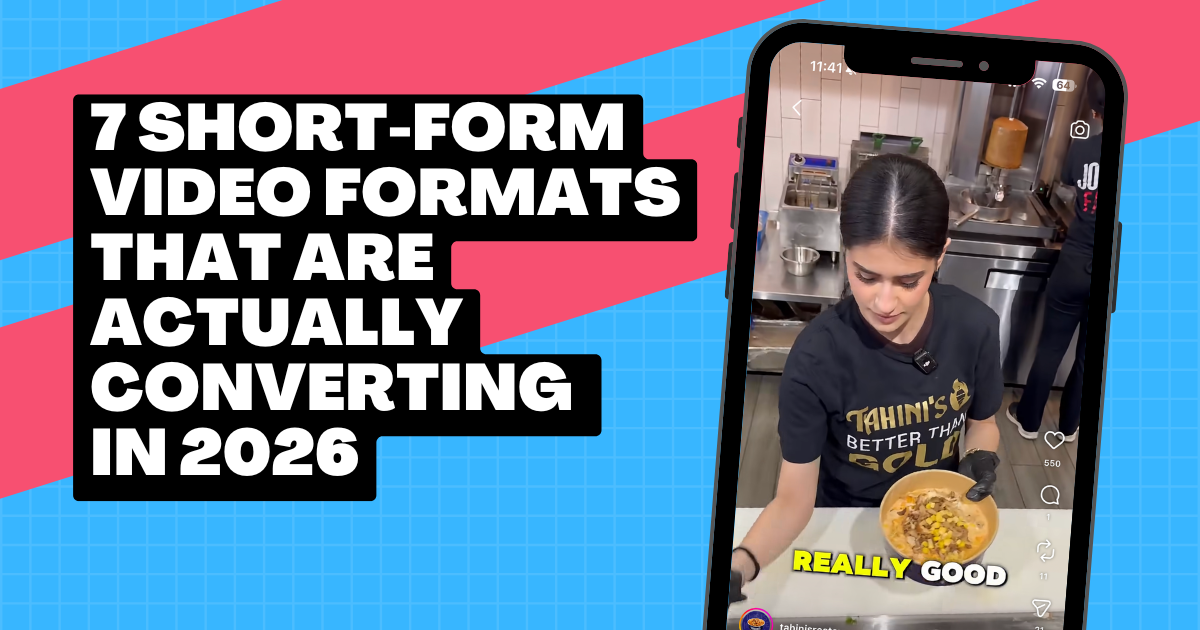
Storybox builds content systems around repeatable formats. For Tahini's, we structured weekly filming into recurring series formats that audiences recognized instantly. The result? 75M+ views every three weeks and millions of followers who show up because they know what they're getting.
That's the difference between content that performs once and content that builds equity.
The best restaurant content strategies do both: drive reach and build recognition.
Here’s the playbook:
According to Think with Google’s 2026 Video Marketing Report, brands combining viral reach with recurring series content see 3.2x higher customer retention than brands relying only on trends.
Views get people in the door. Series content makes them stay.
Views feel good. Brand equity makes money.
The brands winning in 2026 use viral content for reach and recurring formats for recognition. They optimize for both performance and long-term brand recall.
If your strategy is all reach and no retention, people forget you the second they scroll away.
Content that compounds needs consistency, recurring formats, and a system people recognize over time.
That’s what Storybox builds: repeatable content engines that turn attention into revenue.
Viral content optimizes for views, shares, and short-term engagement. Brand-building content optimizes for recognition, familiarity, and long-term affinity. Viral content performs once. Brand content compounds over time. The best strategies use both: viral formats to drive reach, series content to build equity.
Yes, but only if you add branded elements that make it recognizable. Generic food porn drives cravings for the product category, not your specific brand. Add a recurring host, a consistent visual style, or a branded intro sequence to make it stick. The content should feel unmistakably yours.
Consistency matters more than frequency. Weekly is ideal. Bi-weekly works. Monthly is the minimum. The key is predictability. Your audience should know when to expect the next episode. Random posting breaks the compounding effect.
No. Use trends to drive reach, but adapt them to fit your brand voice and format. Don't copy trends. Filter them through your unique perspective. Duolingo, Ryanair, and Gymshark all use trends, but they make every trend feel on-brand.
Look beyond views. Track repeat viewership, audience retention across videos, comments that reference past content, branded search volume, and conversion rates over time. If people are coming back, remembering your content, and mentioning your brand unprompted, you're building equity.