
Most brands underestimate what it actually costs to run social media internally. They see an agency retainer and think, "We could just hire someone for that."
But hiring someone is just the starting line.
You need a content creator who can write, shoot, edit, post, and analyze performance. That's already 3-4 different skillsets. Then you need tools: CapCut for editing, Later or Sprout Social for scheduling, Canva for graphics, analytics platforms for reporting.
Then there's training. Platforms change constantly. What worked on TikTok six months ago doesn't work now. Your in-house person needs time to learn, test, and adapt. That's months of trial and error before you see consistent results.
And if that person leaves? You start over.
Illustrative benchmarks based on 2026 market rates for content roles and agency retainers. In-house assumes $65K salary + $15K tools/training + overhead. Agency assumes $5K-$8K/month retainer.
The hidden costs most brands miss:
According to HubSpot's 2026 Marketing Strategy Report, 63% of marketers say their biggest challenge is producing enough content consistently. In-house teams struggle with volume because they're juggling too many roles.
Agencies solve the volume problem by default. That's all they do.
Agencies aren't just outsourced labour. The good ones bring systems, speed, and expertise you can't build internally without serious investment.
Here's what separates a real agency from a freelancer or in-house setup:
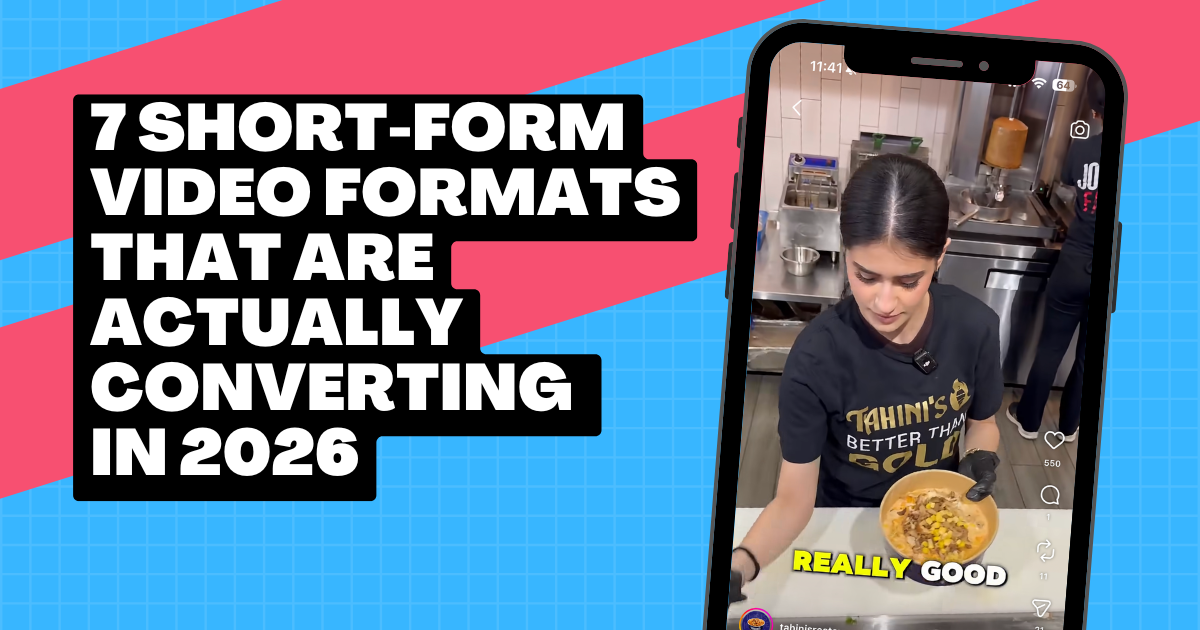
At Storybox, we've helped brands like Tahini's generate over 75 million views every three weeks by building repeatable content systems. That's not luck. It's structure.

The difference between a one-off viral video and sustained growth is whether you have a system. Agencies bring the system. In-house teams have to build it from scratch.
What in-house teams do better:
That's why the best model is usually hybrid: strategy and brand oversight in-house, execution and production with an agency.
The ROI question isn't "How much does the agency cost?" It's "What am I getting back?"
Most brands make the mistake of measuring cost per post. That's the wrong metric. A $500 video that generates 10,000 views and zero leads is a waste. A $2,000 content system that generates 500,000 views and 50 qualified leads is a bargain.
Better ways to measure agency ROI:
According to Sprout Social's 2026 Index, 88% of consumers say they've purchased from a brand after seeing their content on social media. If your content isn't driving purchases, the issue isn't cost — it's execution.
Illustrative growth curve showing compounding reach when using a structured agency system vs starting from scratch in-house. Based on real client trajectories at Storybox.
Questions to ask before hiring an agency:
If an agency can't answer these, they're selling deliverables, not results.
Doing social media in-house can work, but only under specific conditions.
DIY works when:
DIY fails when:
Most brands fall into the second category. They know content matters, but they don't have the bandwidth, expertise, or system to execute it well.
That's where agencies win. They give you back time and replace guesswork with structure.
The biggest mistake isn't choosing in-house or agency. It's doing nothing.
Brands sit on the fence for months, debating whether they can afford an agency, while their competitors are posting every day and building massive audiences.
According to Wyzowl's 2026 Video Marketing Report, 91% of businesses now use video as a marketing tool — up from 86% in 2023. If you're not producing short-form content consistently, you're not just behind. You're invisible.

The cost of doing nothing is higher than the cost of doing it wrong. At least if you're posting, you're learning. If you're sitting still, you're losing ground every single day.
The framework for deciding:
Agencies don't replace your team. They multiply what your team can accomplish.
How much should I expect to pay for a social media agency in 2026?
Retainers typically range from $3,000 to $15,000 per month depending on volume, platforms, and complexity. High-volume short-form content agencies that batch-produce 20-30 videos per month usually sit in the $5,000-$8,000 range. One-off video production agencies charge more per piece but produce less overall content. Always ask what you're getting for the retainer: how many posts, what platforms, and whether strategy and optimization are included.
What's the ROI timeline for hiring a social media agency?
Most brands see measurable traction within 60-90 days if the agency is producing consistent, optimized content. Growth compounds over time — the first month builds the system, the second month starts generating reach, and by month three you should see clear audience growth and engagement trends. If you're not seeing improvement by month four, either the content strategy is wrong or the agency isn't optimizing based on performance.
Should I hire an in-house content creator or work with an agency?
It depends on your goals and bandwidth. Hire in-house if you need someone embedded in your brand full-time, have the budget for salary plus tools and training, and can afford a 6-12 month ramp-up period. Work with an agency if you need results faster, want access to a full production team without hiring multiple people, or need proven systems instead of trial and error. Many brands use a hybrid model: an in-house person manages strategy and brand voice, while the agency handles production and volume.
How do I know if an agency is actually worth the cost?
Ask for case studies with real performance data: views, follower growth, engagement rates, and ideally conversion metrics like leads or sales. A good agency will show you the content system they use, explain how they optimize based on performance, and give you clear deliverables and reporting. If they only talk about creative style and brand storytelling without tying it to measurable outcomes, they're selling deliverables, not results.
Can I justify an agency cost if I'm a small business?
Yes, if the agency's output drives revenue. Small businesses often benefit more from agencies because they don't have the budget to hire full-time content teams. The key is making sure the content is directly tied to business outcomes — driving foot traffic, online orders, leads, or brand awareness that converts. If you're spending $5,000 per month and generating $20,000 in attributable revenue, the ROI is clear. If you can't track that, start by testing a smaller package or project-based work before committing to a long-term retainer.
The question isn't whether you can afford an agency. It's whether you can afford to keep posting inconsistently, burning out your team, and hoping something eventually works.
Agencies don't replace strategy. They replace chaos with structure. They give you back time, speed up your learning curve, and turn content into a repeatable system instead of a monthly scramble.
If you're ready to stop guessing and start building a content engine that actually compounds, Storybox can help. We specialize in high-volume, high-performing short-form content that turns attention into revenue.
Let's build something that works.
Retainers typically range from $3,000 to $15,000 per month depending on volume, platforms, and complexity. High-volume short-form content agencies that batch-produce 20-30 videos per month usually sit in the $5,000-$8,000 range. One-off video production agencies charge more per piece but produce less overall content. Always ask what you're getting for the retainer: how many posts, what platforms, and whether strategy and optimization are included.
Most brands see measurable traction within 60-90 days if the agency is producing consistent, optimized content. Growth compounds over time — the first month builds the system, the second month starts generating reach, and by month three you should see clear audience growth and engagement trends. If you're not seeing improvement by month four, either the content strategy is wrong or the agency isn't optimizing based on performance.
It depends on your goals and bandwidth. Hire in-house if you need someone embedded in your brand full-time, have the budget for salary plus tools and training, and can afford a 6-12 month ramp-up period. Work with an agency if you need results faster, want access to a full production team without hiring multiple people, or need proven systems instead of trial and error. Many brands use a hybrid model: an in-house person manages strategy and brand voice, while the agency handles production and volume.
Ask for case studies with real performance data: views, follower growth, engagement rates, and ideally conversion metrics like leads or sales. A good agency will show you the content system they use, explain how they optimize based on performance, and give you clear deliverables and reporting. If they only talk about creative style and brand storytelling without tying it to measurable outcomes, they're selling deliverables, not results.
Yes, if the agency's output drives revenue. Small businesses often benefit more from agencies because they don't have the budget to hire full-time content teams. The key is making sure the content is directly tied to business outcomes — driving foot traffic, online orders, leads, or brand awareness that converts. If you're spending $5,000 per month and generating $20,000 in attributable revenue, the ROI is clear. If you can't track that, start by testing a smaller package or project-based work before committing to a long-term retainer.