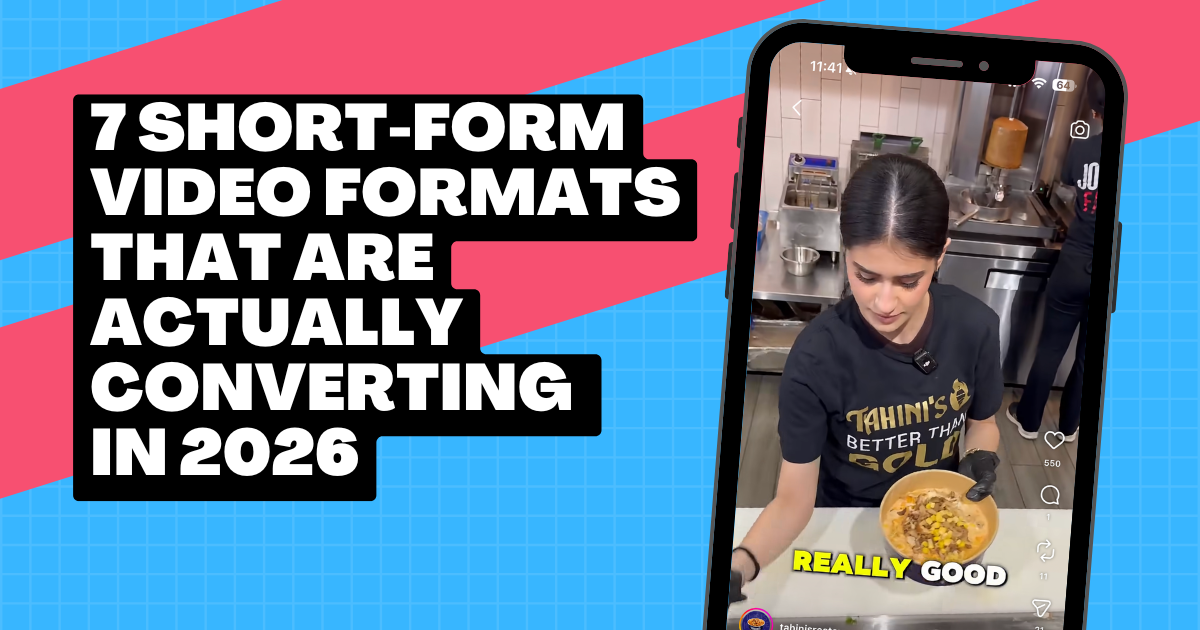
Most brands are still posting random content and hoping it converts. Meanwhile, the smartest teams have quietly figured out exactly which video structures actually drive sales — and they're using the same seven formats on repeat.
Views don't pay the bills. Conversions do. And in 2026, the gap between viral content and revenue-generating content has never been clearer. According to Hootsuite's 2026 Social Trends Report, 68% of marketers now prioritize conversion metrics over vanity metrics like reach and impressions.
The brands winning right now aren't chasing trends — they're using proven formats that turn attention into action. Here are the seven formats that are actually moving the needle in 2026, backed by real performance data from Storybox clients and industry benchmarks.

What it is: Open with a relatable problem, make it worse by highlighting the pain, then present your product or service as the fix.
Why it converts: This format taps into existing pain points your audience is already experiencing. HubSpot's 2026 Consumer Behavior Study found that 73% of purchase decisions start with problem recognition, not product discovery.
Structure:
Real example: A meal prep brand we worked with used this format to address "no time to cook healthy meals." The video started with someone staring at an empty fridge at 8 PM, escalated to ordering expensive takeout for the third night in a row, then introduced their pre-portioned meal kits. Result: 2.4M views, 12% click-through rate to product page, 8.7% conversion rate.
Conversion tip: The agitation phase is where most brands go soft. Don't just mention the problem — make the viewer feel it. Use specific scenarios, not vague statements.
What it is: First-person testing content where you use the product, show the process, and deliver an honest verdict.
Why it converts: Trust. Edelman's 2026 Trust Barometer shows that 81% of consumers need to trust a brand before buying, and user-generated style reviews build that faster than polished ads. Even when brands produce this content themselves, the authentic format outperforms traditional product demos.
Structure:
Real example: A skincare brand filmed their founder using a new serum for 30 days, showing real skin texture changes (not filtered). The video hit 890K views with a 19% save rate and drove a 34% lift in product page traffic. Comments asking "where can I buy this" were pinned with direct links.
Illustrative data based on Storybox client benchmarks and industry performance trends.
Conversion tip: Don't oversell. Show the product failing in small ways or acknowledge limitations. Paradoxically, this increases trust and conversion. Perfect products feel fake.
What it is: Side-by-side comparison of your solution versus the old way, a competitor, or a common alternative.
Why it converts: It simplifies decision-making. Viewers don't have to research — you're doing the work for them. Think with Google's 2026 Shopping Insights found that comparison content reduces purchase hesitation by 42%.
Structure:
Real example: A coffee subscription service compared "grocery store coffee" (stale, inconsistent, long lines) versus their delivery model (fresh-roasted, delivered weekly, customized). The split-screen format made the difference impossible to ignore. 1.8M views, 16% link click rate.
Conversion tip: Make the comparison fair but obvious. Don't trash the alternative — just make yours clearly better through specific, visual differences.
What it is: Challenge a common mistake or outdated practice, then teach the right way (which conveniently involves your product or service).
Why it converts: People hate being wrong, but they love being in the know. This format positions your brand as the authority while creating urgency to fix the mistake. Sprout Social's 2026 Engagement Study found that "call-out" style content generates 2.3x more comments than standard educational posts.
Structure:
Real example: A business software company called out brands still using spreadsheets for project management. The video showed a chaotic spreadsheet with five tabs, missed deadlines, and version control nightmares — then introduced their visual workflow tool. 620K views, 11% trial sign-up rate.
Conversion tip: Lead with empathy, not judgment. Frame it as "we all did this until we learned better" rather than "you're an idiot for doing this."
What it is: Show how your product is made, how your service works, or what happens behind closed doors.
Why it converts: Transparency builds trust, and curiosity keeps people watching. According to Wyzowl's 2026 Video Marketing Report, behind-the-scenes content has a 67% higher completion rate than standard product videos.
Structure:
Real example: A bakery showed the 3 AM dough prep, hand-laminating butter, proofing, baking, and the final golden croissant pull-apart shot. The video humanized the brand and justified the premium price. 3.1M views, 9% increase in weekend foot traffic (tracked via promo code mentions).

Conversion tip: Don't overexplain. Let the visuals do the work. Add text overlays for key steps, but keep the pace fast.
What it is: Teach one specific, immediately actionable thing related to your product category.
Why it converts: It delivers instant value, which builds goodwill and positions your brand as helpful, not just promotional. Meta's 2026 Content Performance Data shows that tutorial-style content has a 41% higher save rate than promotional content.
Structure:
Real example: A fashion brand posted a 30-second Reel showing three outfit combinations using the same white t-shirt from their collection. Each look was styled differently (casual, work, night out) with quick product tags. The video generated 1.2M views and a 22% tap-through rate on product tags.
Conversion tip: Make it genuinely useful, even if someone doesn't buy. The goodwill compounds. They'll remember you when they're ready to purchase.
What it is: Compile customer reactions, testimonials, unboxings, or results into a fast-paced montage.
Why it converts: Social proof is the most powerful conversion driver. BrightLocal's 2026 Consumer Review Survey found that 89% of consumers check reviews or user content before buying. Showing real people using and loving your product removes the last barrier to purchase.
Structure:
Real example: A fitness app compiled 15-second clips of users showing their progress over 90 days. The montage featured real people (not models) with visible results and authentic reactions. 2.7M views, 18% app install rate from viewers who clicked through.
Illustrative benchmark data showing optimal video length for social proof montages based on client performance trends.
Conversion tip: Use real customers, not actors. Even low-quality user clips outperform polished testimonials. Authenticity matters more than production value here.
The difference between content that entertains and content that converts comes down to structure.
These seven formats work because they:
Random content lacks these elements. It might get views, but viewers leave without taking action because there's no structure guiding them toward conversion.
According to Vidyard's 2026 Benchmark Report, videos with clear narrative structure convert 3.4x better than unstructured content, even when view counts are similar.
If you don't have the bandwidth or system to execute this at scale, Storybox builds repeatable content engines around these exact formats. We handle the scripting, filming, editing, and optimization so you get consistent output without burning out your internal team.
Q: Do these formats work across all platforms, or are some better for specific channels?
A: All seven formats work on TikTok, Instagram Reels, and YouTube Shorts. The structure stays the same, but you'll want to adjust tone slightly — TikTok skews more casual and trend-driven, Instagram leans visual and aspirational, YouTube Shorts favours educational and how-to content. The format matters more than the platform. A well-structured PAS video will convert on all three.
Q: How often should I use the same format before switching it up?
A: Use each format until performance drops, not on a set schedule. If a comparison format is converting at 12% every time you post it, keep running it. Only switch when click rates or conversions decline by 30%+ over three consecutive posts. Repetition doesn't kill performance — inconsistency does. Brands like Duolingo have used the same handful of formats for years because they keep working.
Q: What if my product or service doesn't fit neatly into these formats?
A: Every product fits at least 3-4 of these formats. If you sell software, use "You're Doing It Wrong" and "Comparison Breakdown." If you sell physical products, use "Behind-the-Scenes" and "Social Proof Montage." If you offer a service, use "Problem-Agitate-Solve" and "Quick Win Tutorial." The format is a framework — you adapt the specifics to your offering.
Q: Should I add a discount code or link in every video, or does that hurt performance?
A: Always include a CTA, but vary the ask. High-intent formats like "I Tried This" and "Social Proof Montage" can handle direct purchase CTAs. Lower-intent formats like "Quick Win Tutorial" work better with softer CTAs like "follow for more" or "save this for later." According to Later's 2026 Instagram Trends Report, videos with clear but non-pushy CTAs have 23% higher engagement than those with aggressive sales language.
Q: How do I know which format will work best for my brand before testing?
A: You don't. Test 2-3 formats with small batch shoots (4-6 videos each) and let performance tell you what works. Track link clicks, saves, and conversions for two weeks. Double down on the format that drives the best conversion rate, not the highest view count. Most brands find that 2-3 formats become their core content engine, with the others used occasionally for variety.
Views are easy. Conversions are hard. The difference is structure.
These seven formats work because they're designed around how people actually make decisions, not just how they scroll. They build trust, simplify choices, and make taking action feel natural.
If you're tired of posting content that gets views but doesn't move the needle, it's time to stop guessing and start using formats that are already proven to convert. Build a system around 2-3 of these structures, shoot in batches, and optimize based on performance data.
Or let Storybox handle it. We specialize in turning these formats into repeatable content engines that drive real revenue, not just engagement. Let's build something that actually works.